Customisable products in e-commerce
For the first time the cosmetics and beauty products brand Rituals sold customisable products through their webshop. A customer would be able to create a perfume with options for the bottle shape, bottle colour, perfume and engraving on bottle. My part in this was setting up the process with the necessary methods at each step, create a concept, as well as facilitation, stakeholder alignment and product design. I worked cross-functionally together with a UI designer from Rituals, with a product manager, developers and few departments to ensure the backend of the order fulfilment would work. To see the it live, you can check this link and click on the customisable button there.
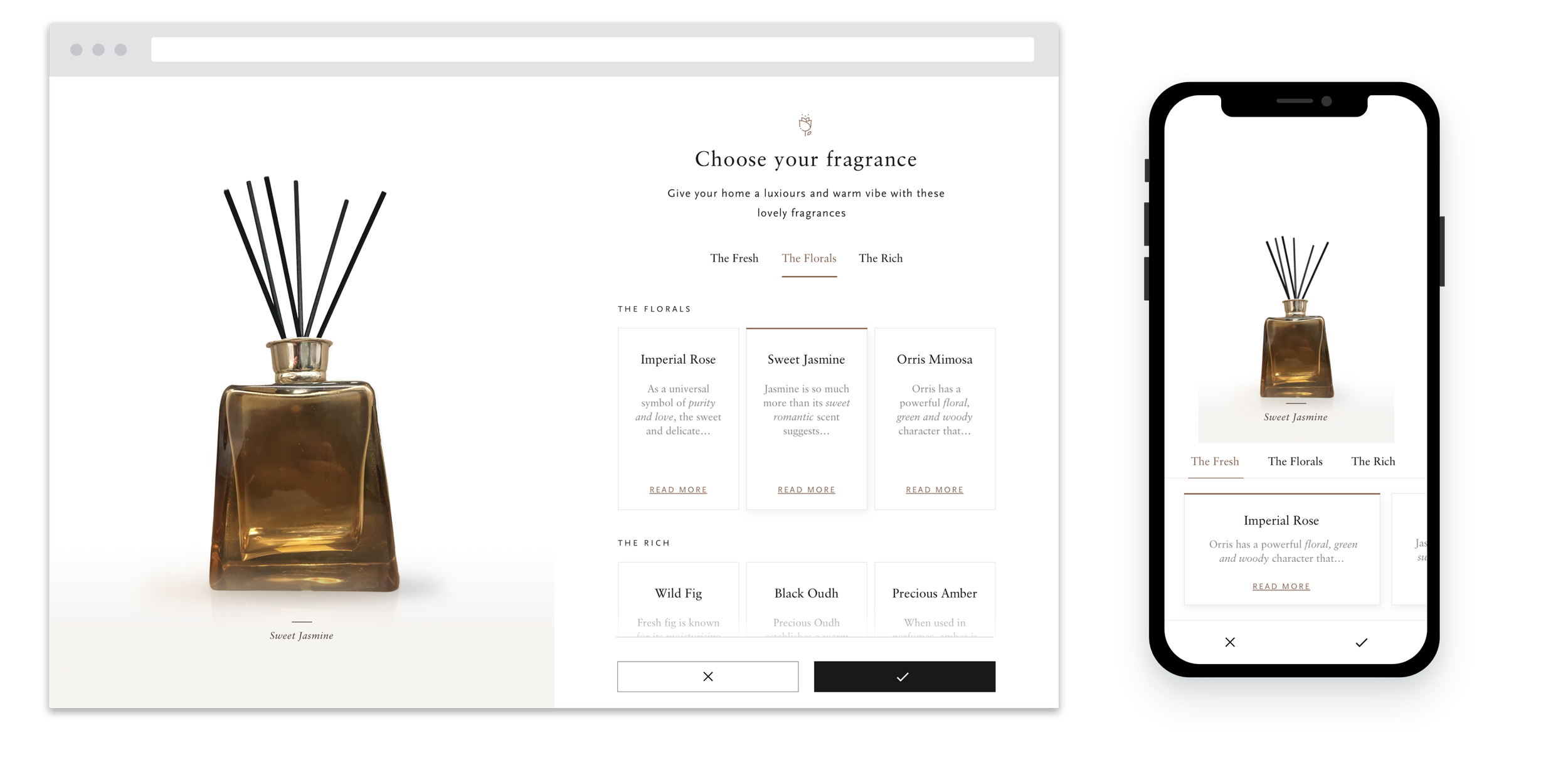
A first for everything
The cosmetics and beauty products brand Rituals opened a flagship store for the first time, it’s named House of Rituals. It would be an experience and have some unique products that are only sold in that store or online. A few of those unique products were customisable and this would be the first for the webshop to sell such products.
The innovation team created the requirements for these 3 customisable products. They are the Talisman ( a perfume ), the signature scented candle and the fragrance sticks . This was the first time customisable products could be ordered through the webshop. This brought some new challenges to the table.
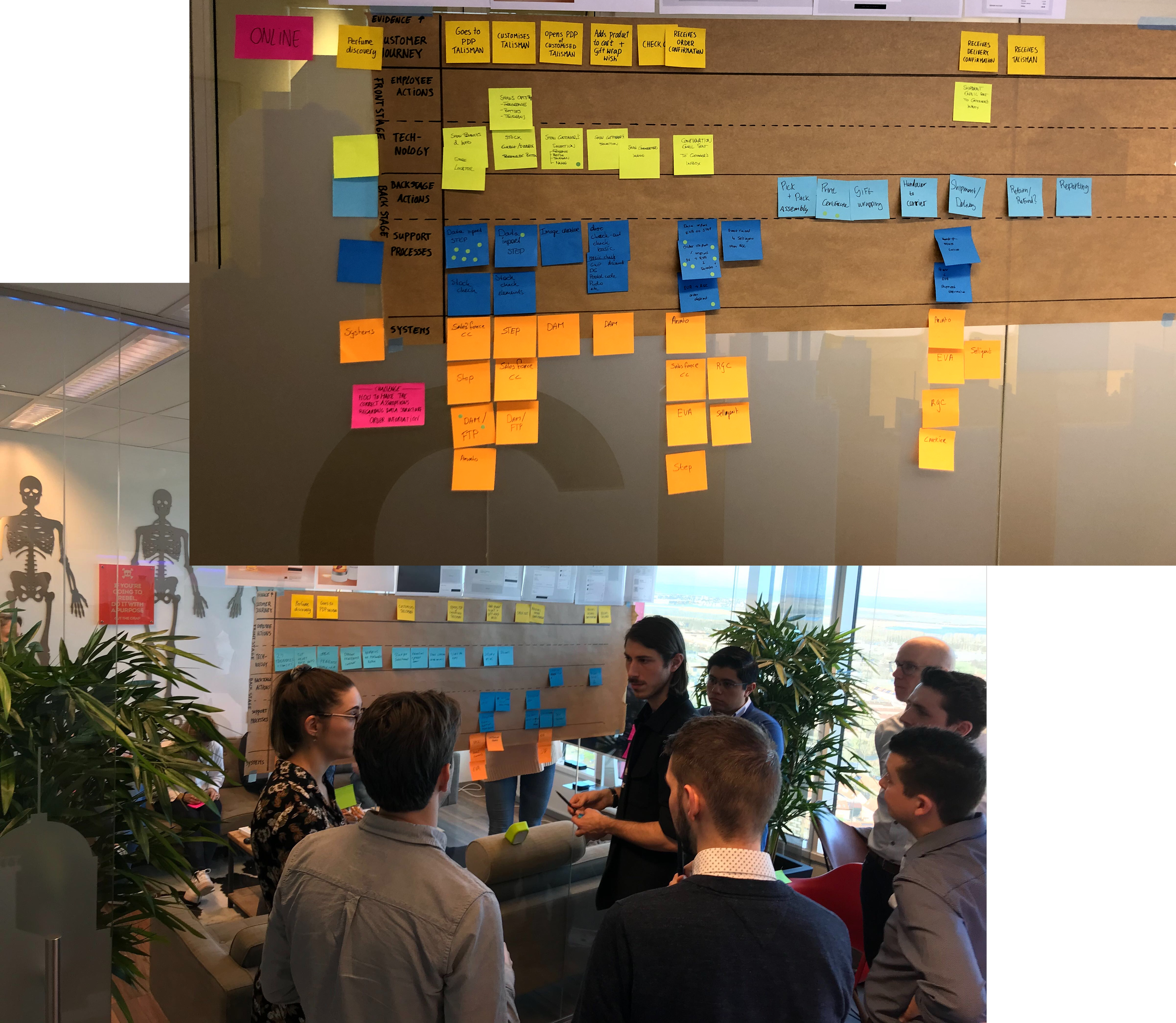
To be able to deliver customised items to customers, we needed to work close together with the teams of supply chain, logistics, warehouse and e-fullfillment. This was new for each of those teams and all of them had their own challenges. To address and bring together their concerns, with a colleague, we organised and facilitated a session to create a service blueprint with all those teams.
Team work makes the ...
In this session we had different teams from different organisations to figure out all the challenges with these products. A service blueprint would help us to uncover all the steps, challenges and where the teams would need each other. Understanding and seeing each others unique challenges would be fruitful to let them work together. Here are some examples of the challenges the teams found out.
For the warehouse it meant that they needed to pack the order exactly as the customer customised it. Meaning the naming should be very clear and consistent throughout the order process.
For supply chain it was important to know how we define these products in STEP (Stibo Systems Enterprise Platform, their solution for creating products in the back-end). This would affect how the products would show up in the webshop through the collections and overviews. Can a user see the 1 product that you can customise on it’s product detail page, or are there 9 variants to see that are “premade” customisations.
For e-fullfillment it was crucial to make sure that EVA (their order system) understands that if 1 customisable option is out of stock, users could still order the product with other options.
For developers it meant that when the user created a customised product and placed it in the cart, it should already temporarily reserve each of the options in EVA. Since these are luxury products there is going to be less supply for them initially and these products exist of multiple options. So a bigger chance for users to order the same option at the same time.
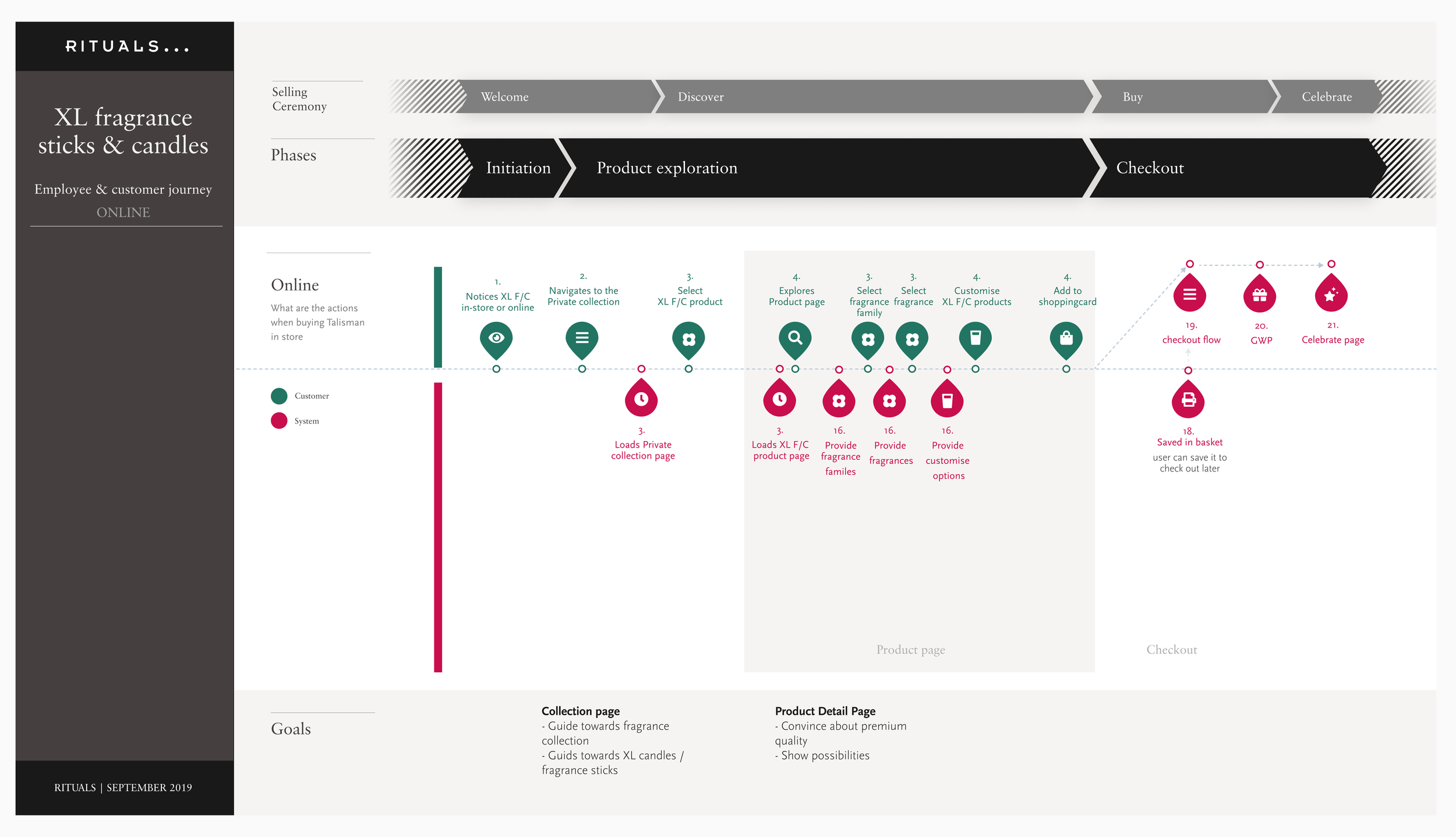
The big picture
Everyone knew the challenges they needed to solve and who was needed for what challenge. Aside from the digital products, we did a bit of service design for how an employee in-store (in House of Rituals) would prepare this for the customer as well. We worked together with the production agency from Rituals on that since they were designing the tables and displays.
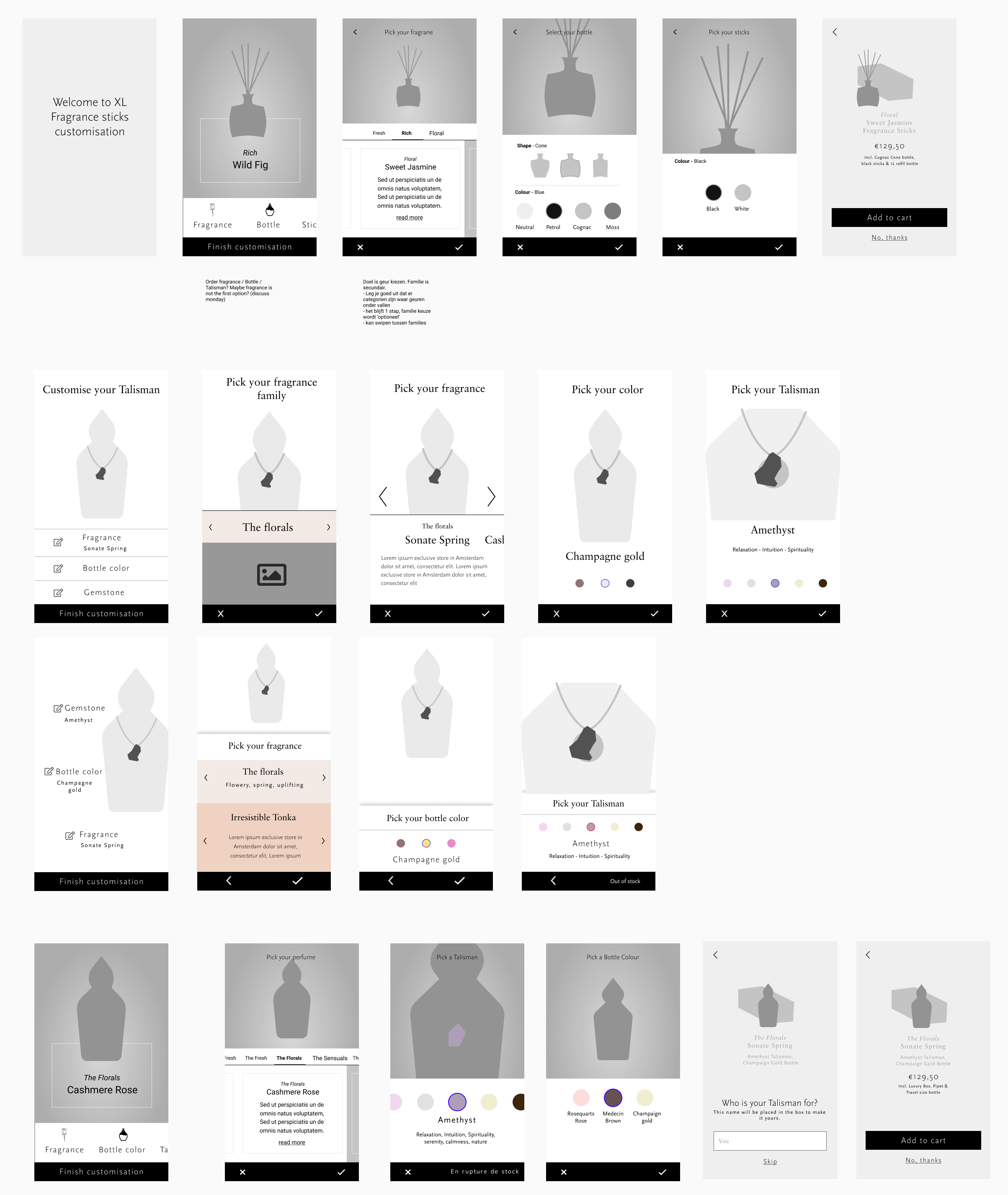
For the digital products it was time for me to wireframe and iterate designs that would work for each of the customisable products.
Bespoke but generic
In-store the experience is hard to match because there you are able to smell the perfumes, the employee will help you and it will feel luxurious. Since all 3 products are luxury products which are in a higher price range than Rituals’ other products, the digital experience should also feel luxurious.
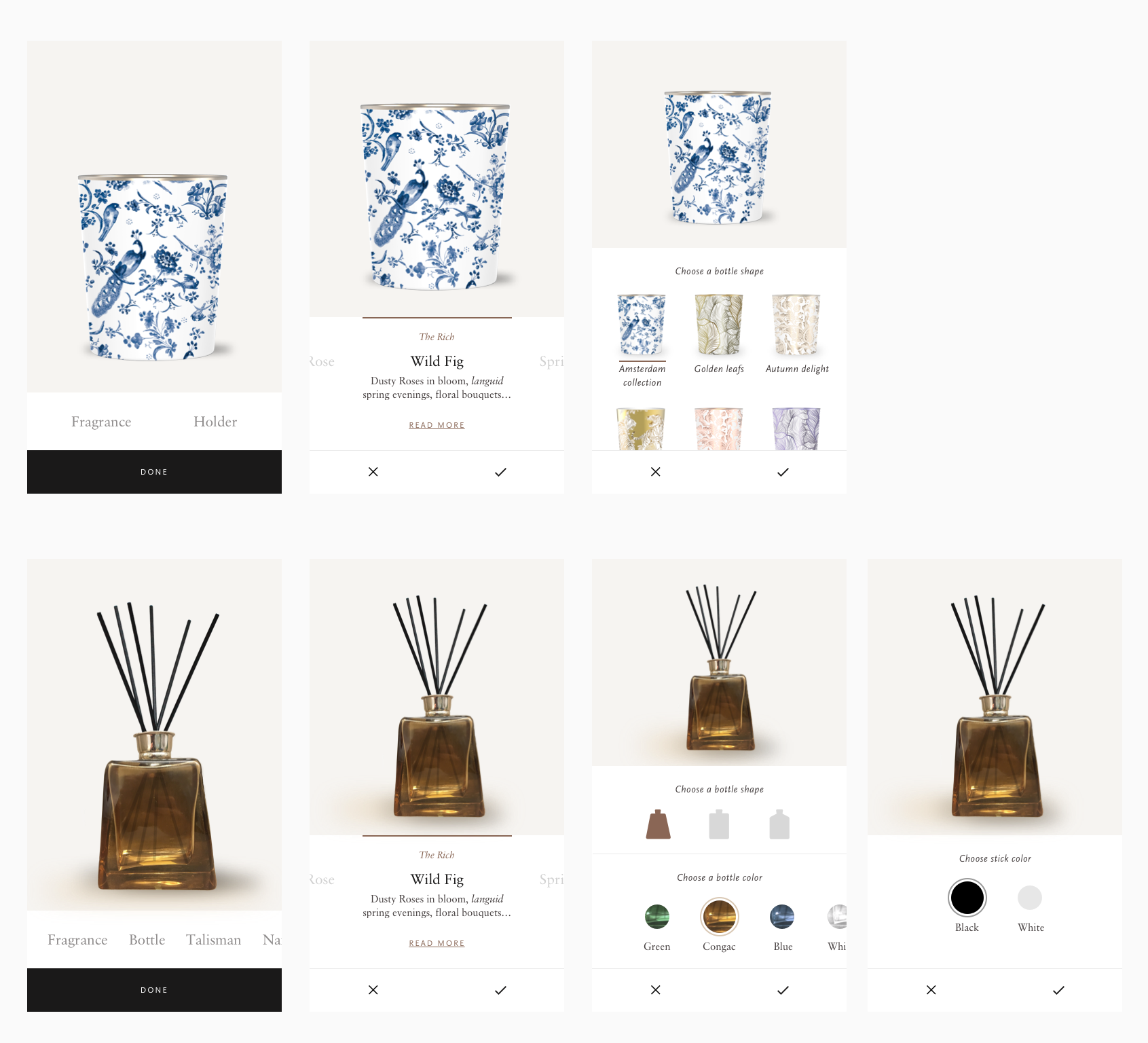
What you see above is a small subset of all the iterations we created for these products. We initially thought about a customiser per product, but that would become too much development work. So we settled for 1 customiser with a few different options depending on the product. I worked on mobile first and figured out interactions to prominently showcase the product and at the same time made it easy to access the pickers and change options. When the product won’t change visually (with the fragrances), the pickers take up more real estate to show the options.
Design's usefulness
In this project the actual designs were not the biggest challenges for me. It was to bring the right people of the different teams of different organisations in the same room and work together on the challenges ahead. Using design to uncover specific or shared challenges unifies people. It makes people more inclined to help each other since they can see each others problems.
That is also what I enjoyed so much on this project— helping and aligning the different parties by facilitating and visualising a holistic view of the project. I love it when design can be used in different ways than how design is generally viewed.